Jojy Cheriyan MD; PhD; MPH; MPhil
Artificial Intelligence (AI) is rapidly transforming healthcare, with organizations eagerly adopting these advanced tools. However, this enthusiasm is tempered by calls from medical experts for immediate oversight to balance innovation with evidence-based medicine and patient safety.
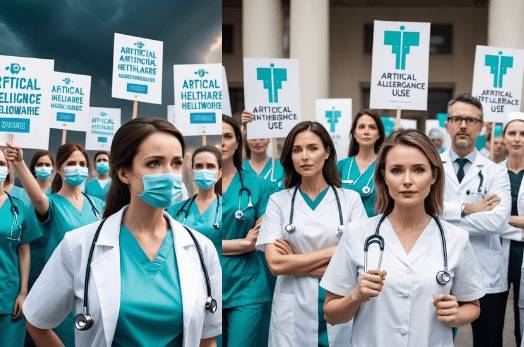
Last month, hundreds of nurses from the Kaiser Permanente Hospital System in San Francisco took to the streets to protest the use of AI in healthcare. They specifically criticized an AI feature within the Epic Electronic Health Record (EHR) system that determines nurse staffing based on real-time charting. The nurses argued that this method might not accurately or fairly account for their work. Additionally, they raised concerns about AI chatbots interacting with patients, which could pose safety risks if the AI provides incorrect advice. The growing integration of AI in their jobs, assisting with documentation, virtual nursing, and other telehealth platforms, also worried the nurses.
The lack of federal regulation on AI in healthcare exacerbates these concerns. Only a few states have enacted AI legislation. For instance, an Illinois bill allows nurses to overrule AI decisions if they believe it is in the patient’s best interest. More states are following the path. The ethical concerns of AI use in healthcare still remains as a concern.
Healthcare IT companies selling these high-cost AI tools claim that their intention is to make healthcare more efficient by automating routine, repetitive, and non-value-added tasks, allowing providers and staff to better focus on patient care. However, physicians and nurses remain skeptical. They question who would be responsible for patients’ safety, quality, and privacy concerns. Can the tech companies creating these AI tools and large language models (LLMs) take full responsibility for all potential errors, unforeseen risks and liabilities?
Despite these concerns, AI also offers significant potential benefits to healthcare:
- Enhanced Diagnostics: AI algorithms can analyze medical images, lab results, clinical notes and patient histories to identify patterns and make diagnostic suggestions, often with remarkable accuracy. This can lead to earlier and more accurate diagnoses, improving patient outcomes.
- Personalized Medicine: AI can process vast amounts of data to identify how different patients respond to various treatments, allowing for more tailored and effective treatment plans.
- Predictive Analytics: AI can predict patient deterioration, readmission risks, and disease outbreaks, enabling proactive care and better resource allocation.
- Operational Efficiency: Automating administrative tasks such as scheduling, billing, and documentation frees up healthcare professionals to spend more time with patients.
- Telemedicine and Virtual Care: AI-powered platforms can enhance telemedicine services, providing remote monitoring, virtual consultations, and continuous patient support.
The debate over AI in healthcare highlights the need for a balanced approach that incorporates innovation while ensuring patient safety and evidence-based practices. As AI continues to evolve, it is crucial to establish robust regulations and safeguards to protect both healthcare providers and patients. Embracing AI’s potential benefits while addressing its risks can lead to a more efficient, effective, and equitable healthcare system.
The content provided on this blog, “Medical and Healthcare Insights,” is for informational purposes only and is not intended as a substitute for professional medical advice, diagnosis, or treatment. The views and opinions expressed in the blog posts are those of the author and do not necessarily reflect the official policy or position of any healthcare institution, organization, or employer. Readers are encouraged to consult with qualified healthcare professionals for any health-related questions or concerns. The author and the blog are not responsible for any errors or omissions, or for any outcomes related to the use of this information. Use of this blog and its content is at your own risk.

 Medical & Healthcare Insights
Leave a reply to Libi Cancel reply